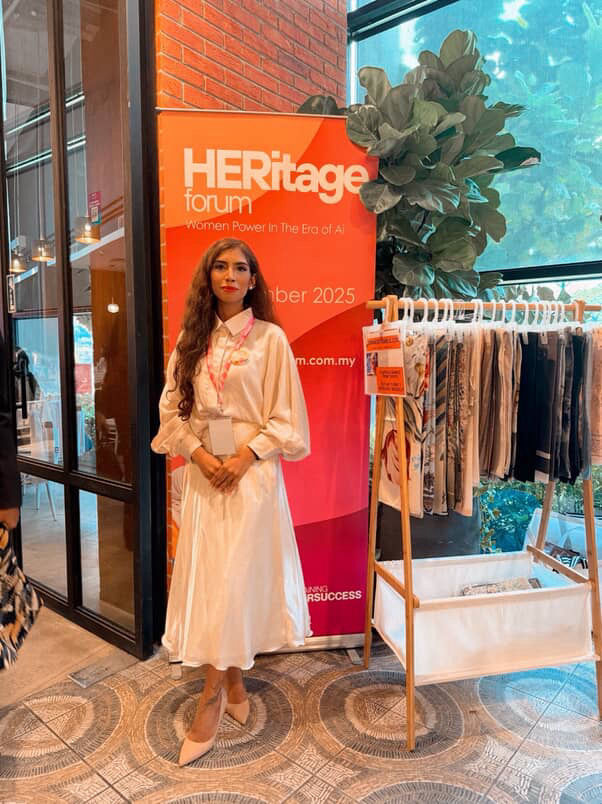
AI × Energy Researcher | Lecturer | Speaker | Accredited AI Trainer

Mirza Rayana Sanzana  

I’m an AI researcher and Lecturer at Monash University Malaysia’s School of Information Technology, working at the intersection of artificial intelligence and energy systems. My interdisciplinary background spans computer science, civil engineering and energy systems, with research focused on AI-driven energy management, thermal and hybrid energy storage, and renewable energy integration.

Beyond research and teaching, I am an HRD Corp Accredited Trainer and speaker, sharing applied AI and interdisciplinary research with academic, industry and technology communities.

PhD interdisciplinary (Computer Science & Civil Engineering) | MSc in Computer Science | BSc in Software Engineering 
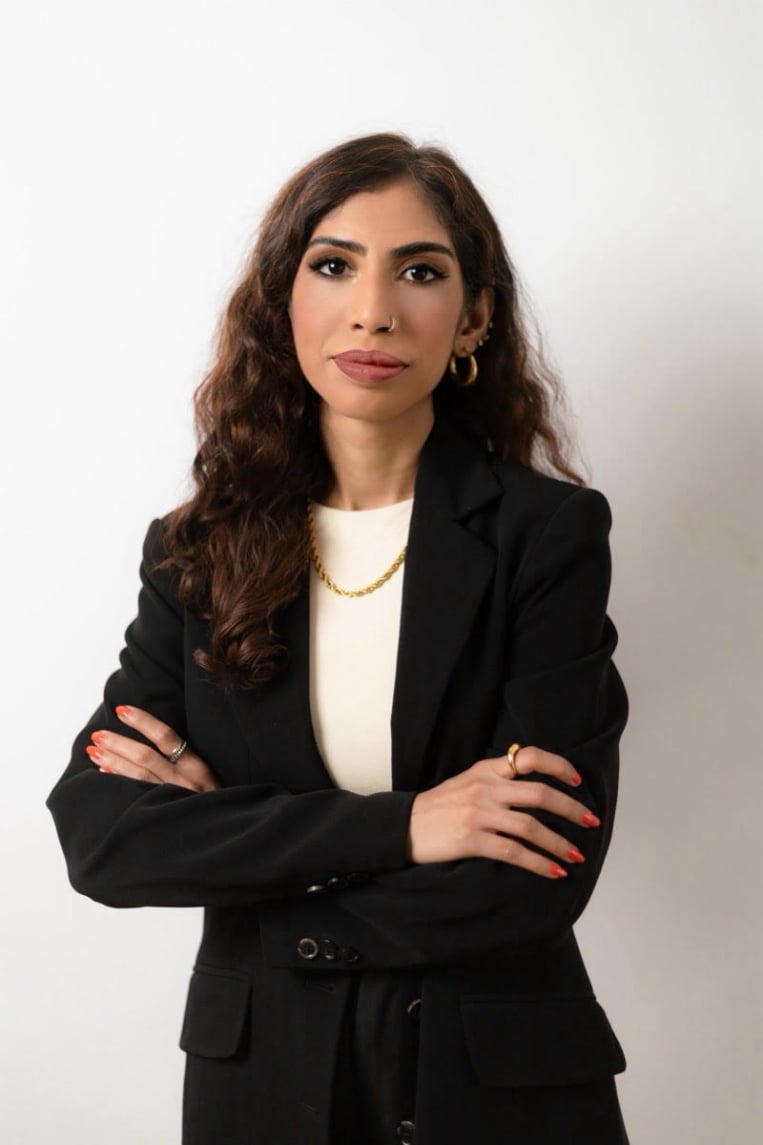
Mirza Rayana Sanzana

About Me

I am an AI researcher and Lecturer at Monash University Malaysia, working at the intersection of artificial intelligence, energy systems and the built environment. My interdisciplinary background spans computer science, software engineering and civil engineering.

My research focuses on AI-driven energy management for thermal and hybrid energy storage systems, renewable energy integration and climate-resilient buildings. Building on my doctoral work in machine learning for thermal energy storage air-conditioning systems, I now develop data-driven models and intelligent control strategies to improve energy efficiency, flexibility and decarbonisation.

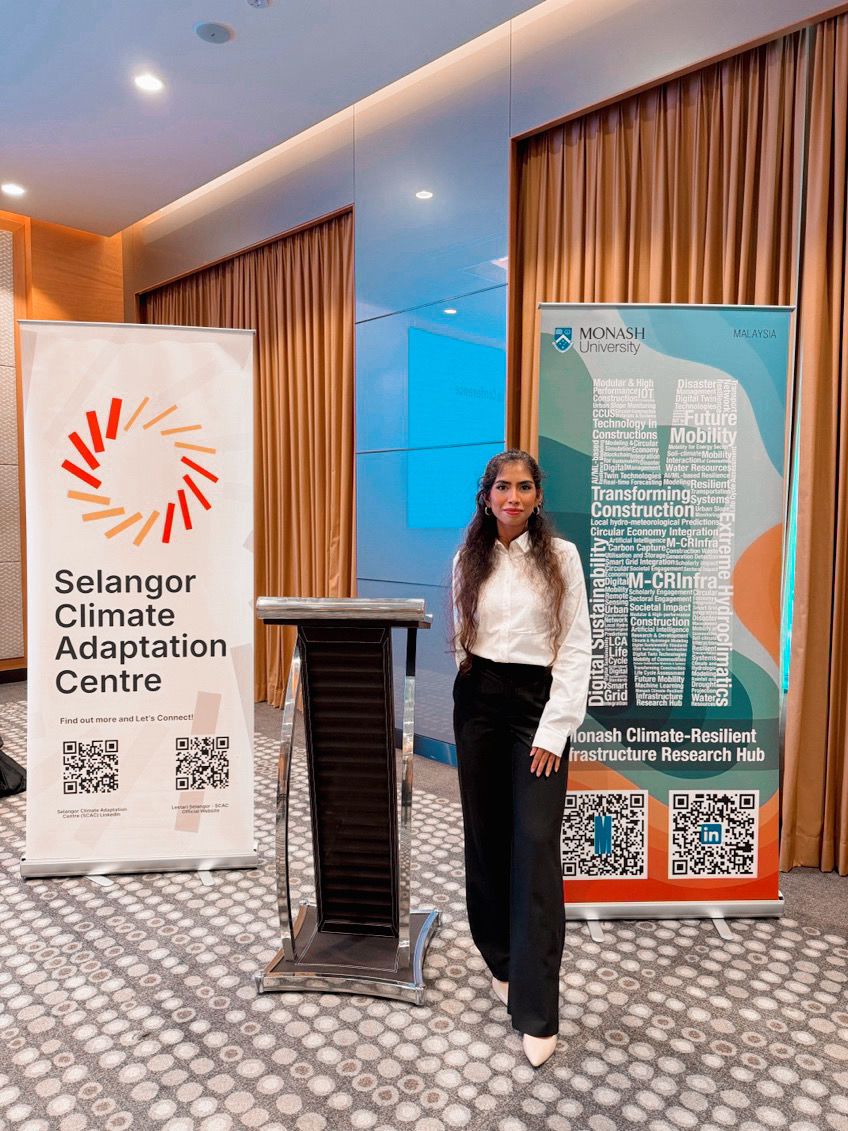
Alongside research and teaching, I am an HRD Corp Accredited Trainer, delivering training in AI and emerging technologies. I also contribute to interdisciplinary research through the Monash Climate-Resilient Infrastructure Research Hub and engage with academic, industry and technology communities through speaking, mentoring and professional activities.

I welcome collaborations in AI for energy systems, sustainable buildings, renewable integration and climate resilience, as well as enquiries from prospective research students, industry partners and organisations interested in research, speaking or professional training.
 

Research Interests & Motivation

Artificial Intelligence • Hybrid Energy Storage Systems • Thermal Energy Storage • Renewable Energy Integration • Digital Twins • Energy Optimisation • Machine Learning • Intelligent Control • Climate-Resilient Energy Systems

My research investigates how artificial intelligence can improve the coordination and operation of energy systems, particularly within buildings. I focus on combining forecasting, optimisation and intelligent control to enable more effective integration of renewable generation and energy storage.

A central theme of my work is hybrid energy storage, particularly the coordination of thermal energy storage with complementary technologies such as batteries and renewable generation. I am interested in how AI-driven energy management and digital twins can anticipate energy demand, optimise storage decisions, reduce peak loads and improve system flexibility while accounting for real-world operational constraints.

My broader research vision is to develop intelligent, explainable and scalable energy systems that support building decarbonisation, renewable energy integration and climate resilience.

Current research themes

• AI-driven energy management and intelligent control
• Thermal and hybrid energy storage systems
• Renewable energy integration and building flexibility
• Forecasting and optimisation for energy systems
• Digital twins for intelligent building energy management
• Explainable and policy-aware AI for sustainable energy systems

Research and Teaching Experience

My research experience spans artificial intelligence, energy systems and sustainable infrastructure, with a particular focus on machine learning, forecasting and optimisation for thermal and hybrid energy storage systems. I have worked across interdisciplinary research environments bridging computer science and engineering, from doctoral research on AI-enabled thermal energy storage to current work on intelligent energy management and renewable energy integration.

As a Lecturer at Monash University Malaysia, I teach and supervise students in computing and software engineering while integrating research, real-world applications and industry perspectives into learning. My teaching approach emphasises active and project-based learning, helping students connect technical foundations with practical problems and responsible technology development.

Beyond university teaching, I am an HRD Corp Accredited Trainer and contribute to AI upskilling, professional learning, mentoring and knowledge exchange across academic and industry communities.
 

Doctoral Researcher

University of Nottingham, Malaysia
Full-time | Sep 2019 - Nov 2023


• Led multidisciplinary research optimizing thermal energy storage systems for air conditioning in commercial buildings using ML techniques.

• Published 7+ articles in Q1 and Q2 journals, contributed a book chapter, and presented at 4+ international conferences.

• Proposed innovative strategies for enhancing commercial building sustainability using deep learning and rainwater harvesting techniques.

• Recognized as a Semi-Finalist in the American Association for the Advancement of Science (AAAS) competition for poster presentation.

• Awarded second place by MNFF Network for a 5-minute thesis presentation.

• Acknowledged as a Global Changemaker for research endeavors.

COLLABORATOR: Dr. Jing Ying Wong (Main Supervisor); Prof Tomas Maul (Co-Supervisor); Dr. Chun-Chieh Yip (Co-Supervisor Ext); Dr. Kher Hui Ng (Advisor); Dr. Yousif Abdalla Abakr (Advisor); Prof Andy Chan (Advisor); Dr. Mostafa Abdulrazic (Collaborator)

Graduate Research Assistant

University of Nottingham, Malaysia
Jun 2023 - Sep 2023


• Developed a VR experience using Oculus Quest for BIM education to enhance student engagement and understanding of complex concepts in Civil Engineering for a Teaching and Learning research.

• Conducted research on immersive learning experiences for higher education, resulting in the successful implementation of VR technologies in the curriculum. 

COLLABORATOR: Dr. Jing Ying Wong

Postdoctoral Researcher

Independent
Apr 2024 - May 2025


• Developed a machine learning–based urban heat island (UHI) mitigation framework as an independent researcher for the EY Open Science Data Challenge 2024, focusing on sustainable urban planning strategies.

• Collaborated with international teams to apply AI and machine learning models for early detection of breast cancer, contributing to advancing diagnostic accuracy and supporting global health initiatives.

• Initiated research on AI-driven solutions for waste management challenges in least developed countries (LDCs), aiming to optimize resource use and promote environmental sustainability.

• Conducting research on autonomous vehicle security, emphasizing safe V2X (Vehicle-to-Everything) communications and the ethical deployment of AI in future mobility systems.

COLLABORATOR: Dr. Vimal Rau, Dr. Jing Ying Wong, Prof Tomas Maul, Dr. Iman Liao, Prof Shafi Mohamed Tareq

Lecturer (Researcher and Teaching)

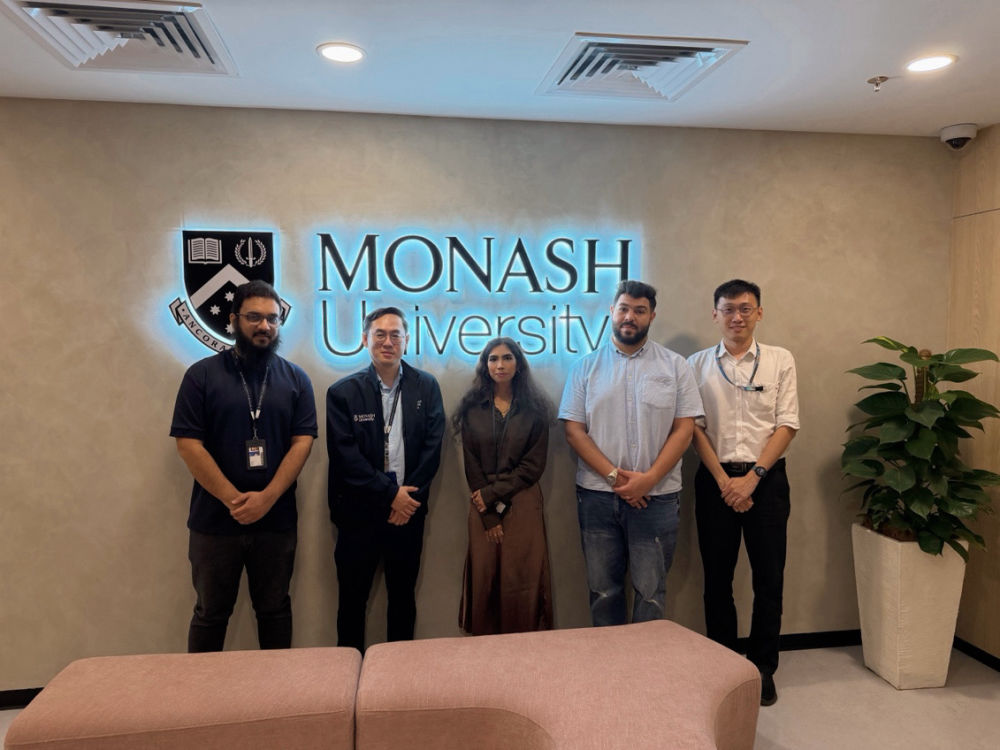
Monash University, Malaysia
September 2025 - Present


• Educational content delivery for the School of Information Technology FIT1056, FIT9137.

• Contributing to multidisciplinary research utilizing AI.

• Open to interdisciplinary collaborations. 

SUPERVISOR: Associate Prof Tan Chee Keong

Research Team Lead

Taara Quest: AI Mentorship for Women in Leadership
Jun 2025 - Present


•Taara functions as a 24/7 AI "influencer" mentor, advocating for women's rights in male-dominated fields—offering career guidance, stress‑management practices, and mental health support through relatable roleplay and chat .

• The project emphasizes creating a supportive community where women share real experiences about work‑life balance and leadership pressures—especially meaningful for women with disabilities striving to assert themselves and lead effectively .

• Taara Quest actively solicits feedback on its mentor persona (style, representation, tone), aiming to tune the AI to genuinely reflect diverse women's lived experiences—an effort that aligns with your goal to explore impact and usability in meaningful, realistic settings.

COLLABORATORS: Dr. Luise Frohberg

Graduate Research and Teaching Assistant

University of Nottingham, Malaysia
Dec 2020 - Jul 2021


• Designed and developed a 3D Chemistry and Biology Lab Game using Unity, enhancing interactive learning in higher education settings for a Teaching and Learning research.

• Co-authored a research paper on the impact of gamified virtual labs, presented at an international conference.

• Mentored students and assisted faculty in the delivery of lectures and lab sessions during remote learning transitions. 

COLLABORATORS: Dr. Jing Ying Wong; Jaya Kumar Karunagharan, Jason Chia; Dr. Mostafa Abdulrazic

Graduate Research Assistant

University of Nottingham, Malaysia
Dec 2019 - Jan 2020


• Developed a VR simulation with Oculus Go for Pharmaceutical students, enhancing student learning outcomes and career preparation.

• Conducted usability studies and iteratively improved the VR simulation based on student feedback and learning analytics. 

COLLABORATORS: Dr. Jim Chai;  Dr. Mostafa Abdulrazic

Graduate Research Assistant

University of Nottingham, Malaysia
Oct 2019 - Dec 2019


• Collaborated in developing an immersive Virtual Reality Lab game to teach complex chemistry topics to higher education students.

• Created an innovative experience for visualizing molecules from various angles, enhancing knowledge retention.

• Delivered engaging lectures using a holographic AI, incorporating science fiction elements to make learning enjoyable.

• Designed the lab as a task-based environment with quizzes, promoting active student participation.

• Utilized Oculus Go with Controllers to enhance the immersive and interactive learning experience.

COLLABORATORS: Dr. Jing Ying Wong; Dr. Khoo Teng Jing; Dr. Mostafa Abdulrazic

Research Assistant

CAPE, University of Nottingham, Malaysia
Aug 2019 - Feb 2020


• Collaborated for a research related to an alumni social media platform using React, promoting networking and soft-skills development among graduates.

• Managed project challenges related to funding and COVID-19, ensuring the platform's timely delivery.
 

COLLABORATORS: Dr. Simranjeet Kaur Judge; Dr. Rozilini M Fernandez; Dr. Mostafa Abdulrazic; KR Selvaraj

Teaching Assistant

University of Nottingham, Malaysia
2019-2022


• Assisted in grading, tutoring, and student support for Civil Engineering and Computer Science courses.

• Prepared lab materials and assessed coursework for Computer Science and Software Engineering.

• Provided academic mentorship to students, helping them navigate coursework and develop a deeper understanding of complex concepts.

• Completed postgraduate teacher training and achieved certification to
teach at the university level.

MODULE CONVENORS: Dr. Radu Muschevici; Dr. Jing Ying Wong

Master’s Research Project

University of Nottingham, Malaysia
Jul 2019 - Sep 2019


• Created a VR game for higher education using Oculus Rift and Unity, resulting in a publication in the Journal of Applied Research in Higher Education.

• Conducted user studies and refined game design to enhance educational outcomes, demonstrating that combining VR games with traditional lectures significantly improves learning gain, memory, and knowledge retention.

• The research shows that immersive VR games, when blended with traditional lectures, can be an effective pedagogical tool, potentially transforming educational delivery and engagement.

COLLABORATORS: Dr. Kher Hui Ng (Supervisor); Dr. Jing Ying Wong (Supervisor); Dr. Mostafa Abdulrazic

Research Project: Serious 3D Cultural Game with IoT Integration

University of Nottingham, Malaysia
Jul 2019 - Sep 2019


• Collaborated to research 3D cultural game for UNESCO’s Malacca site, incorporating IoT elements like RFID for interactive learning. where players engaged in trading using RFID cards and interacted with NPCs to learn about cultural heritage.

• Designed to promote cultural awareness and heritage preservation, specifically tailored for the UNESCO World Heritage Site in Malacca.

• Employed a storytelling approach to engage players, emphasizing cultural significance to resonate with the youth and align with UNESCO's goals of cultural preservation.

COLLABORATORS: Dr. Mostafa Abdulrazic; Dr. Kher Hui Ng

Research Project: Maker-based Serious 3D Game Authoring Tool for Digital Cultural Learning

University of Nottingham, Malaysia
Nov 2019 - Nov 2023


• Collaborated on researching a serious 3D game authoring tool focused on cultural heritage education and maker education, integrating IoT technology to engage younger generations.

• Aligned research outputs with the United Nations Sustainable Development Goals (SDGs), particularly in education and cultural preservation, and validated the tool through expert interviews and user interaction.

• Presented findings at conferences, including the "1st Postgraduate and Early Career Researcher Conference" in Kuala Lumpur (December 2022) and the "9th Electronic Conference on Sensors and Applications" in Basel (November 2022), highlighting innovative approaches in cultural game authoring. 

COLLABORATORS: Dr. Mostafa Abdulrazic; Dr. Kher Hui Ng

Educational Qualifications

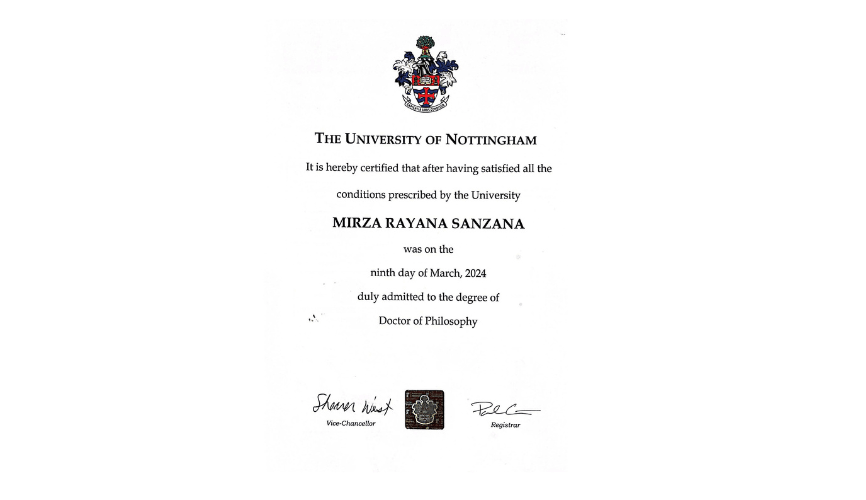
PhD in Civil Engineering

Earned the doctoral degree (36 month Doctoral degree) at the University of Nottingham. I had maternity leave 54 weeks and an extension of 6 months due to COVID19 pandemic.

Mirza Rayana Sanzana Certificate
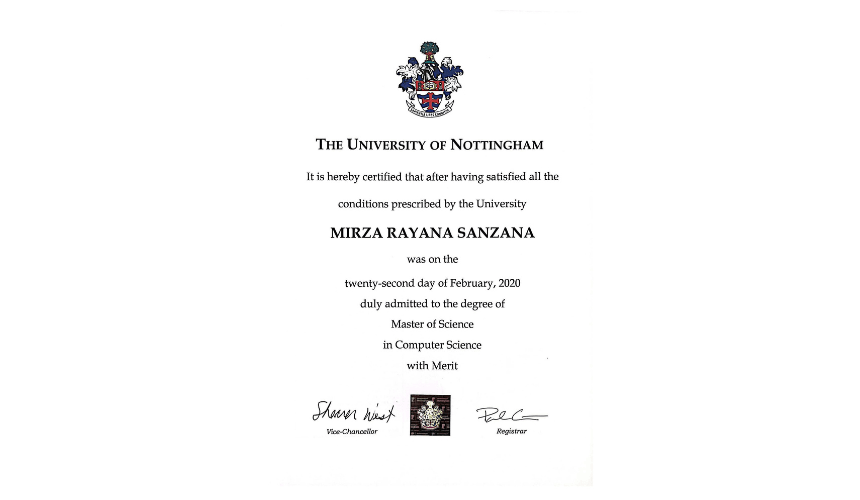
MSc in Computer Science

Earned the Master of Science in Computer Science (12 months) and my Masters Research Project achieved a distinction (74%) and in overall degree achieved a Merit (64.5%).

Mirza Rayana Sanzana Certificate
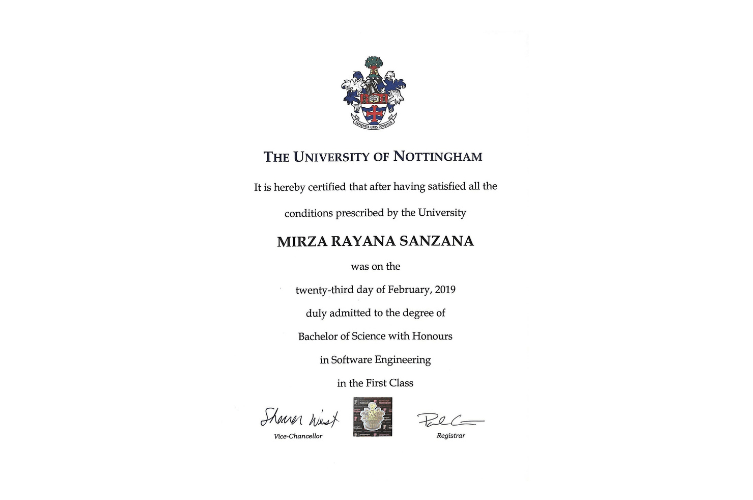
BSc in Software Engineering
First completed my Foundation in Engineering (12 month). Earned the Bachelor of Science in Software Engineering (36 months) with Honors and First Class (73%). My Final Year Project achieved a First Class (80%). 
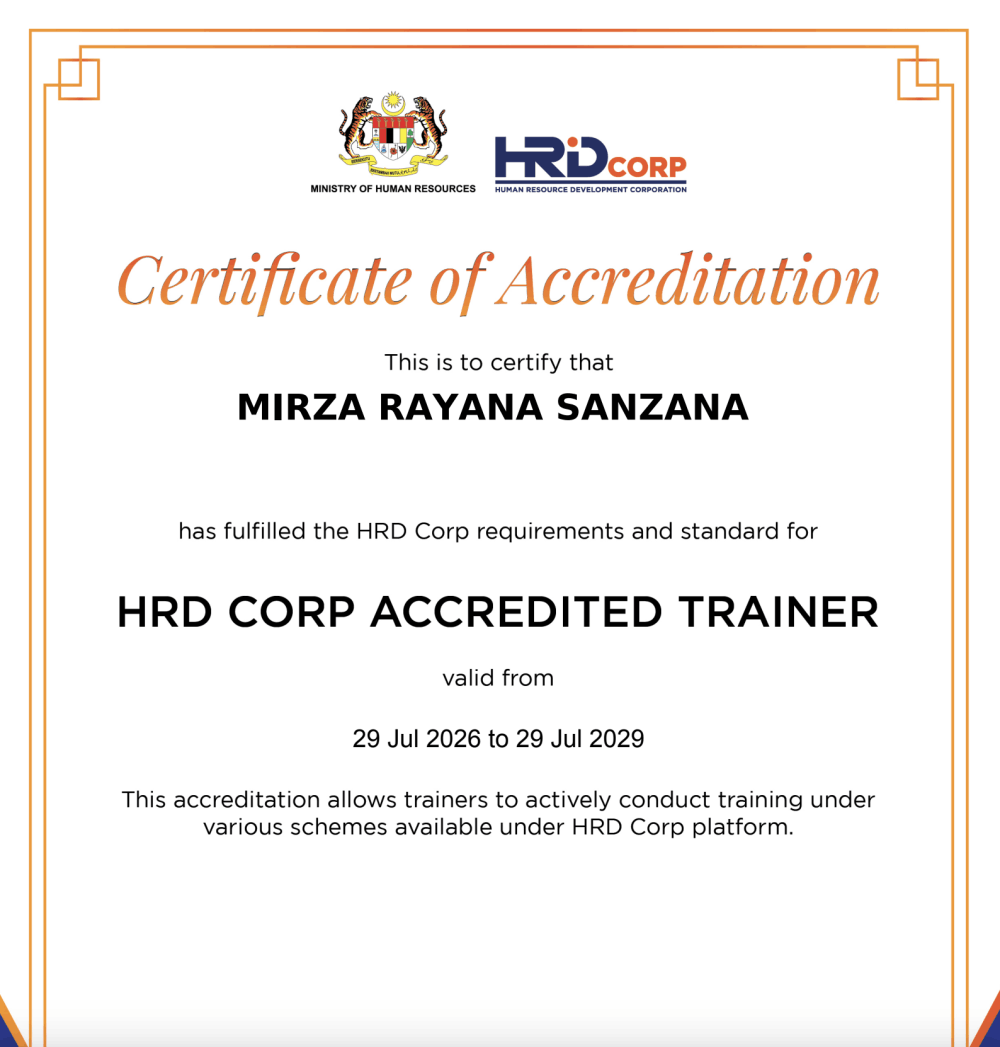
Mirza Rayana Sanzana Certificate

Research Projects

Computer Vision for Cancer Research

Driven by a long-standing interest in cancer research, I am currently focusing on computer vision techniques for early diagnosis of breast cancer as part of the ACROBAT Challenge. My work aims to leverage advanced imaging and machine learning methods to enhance diagnostic accuracy and support medical professionals in identifying cancer at its earliest stages, potentially saving lives through early intervention.
Collaboration: Dr. Iman Yi Liao; Dr. Mostafa Abdulrazic, Cancer Research Malaysia

Autonomous Vehicle Security for Vehicle-to-Everything (V2X) Communication

My research in autonomous vehicle security centers on enhancing V2X communication, a crucial aspect of the evolving landscape of intelligent transportation. I investigate potential vulnerabilities and develop strategies to secure communications between vehicles, infrastructure, and other connected devices, contributing to safer, greener, and more efficient urban mobility systems.
Collaboration: Dr. Vimal Rau; Prof. Tomas Maul; Mostafa Abdulrazic

Artificial Intelligence for Resilient and Sustainable Cities

I am committed to advancing AI-driven solutions for resilient and sustainable urban environments, with a particular focus on optimizing energy systems and mitigating urban heat island effects in densely populated cities. My research explores how Artificial Intelligence can enhance urban design, renewable energy integration, and adaptive environmental management, contributing to healthier, more energy-efficient cities amidst climate change challenges.
Collaboration: Dr. Fadi Al Machot, Dr. Jing Ying Wong,  Dr. Chun-Chieh Yip, Dr. Mostafa Abdulrazic.

Waste Dump Site Detection and Mapping with Drones using GIS

In the pursuit of a cleaner environment, I utilize drone technology combined with GIS for detecting and mapping waste dump sites. This research aims to provide efficient and accurate data to aid in environmental monitoring, policy-making, and urban planning, addressing the pressing issue of waste management in growing urban areas. Collaboration: Dr. Shafi Mohammed Tareq; Mostafa Abdulrazic

Technological Advances for Innovative Teaching and Learning

My passion for enhancing educational experiences drives my research into technological advancements in teaching and learning. From exploring lecture-based and virtual reality game-based education to developing gamified virtual labs, my work aims to create interactive and low-risk learning environments in fields like biology, chemistry, pharmaceuticals, and BIM education. My goal is to harness technology to make learning more engaging, accessible, and effective for students across various disciplines.
Collaboration: Dr. Jaya Kumar Karunagharan, Dr, Jim Chia, Dr. Jing Ying Wong, Dr. Jim Chai, Dr. Kher Hui Ng

My Top Publications

Lecture-based, virtual reality game-based and their combination: which is better for higher education?

This study explores the use of virtual reality (VR) games as educational tools, particularly when combined with traditional lectures. It aims to determine whether blending immersive VR games with lectures enhances learning, memory, and knowledge retention while adding entertainment value. The research compares three learning methods: traditional lectures, a VR game on oil rig exploration, and a combination of both. Results show that the combined approach significantly boosts learning and retention, suggesting it could be a valuable teaching tool. However, the study's findings are based on a single VR game, and varying participant groups may have slightly influenced the outcomes. The research provides evidence that integrating VR games into curricula could enhance educational effectiveness.
Journal of Applied Research in Higher Education


DOI: https://doi.org/10.1108/JARHE-09-2020-0302

Gamified virtual labs: shifting from physical environments for low-risk interactive learning

This study investigates the use of gamified virtual labs in higher education, focusing on their effectiveness as educational tools. It explores whether these immersive labs can enhance student engagement and facilitate low-risk active learning. The research includes two gamified virtual labs with nine essential biology and chemistry experiments, integrated into a science foundation course. A post-participation survey assessed the impact of gamification. Results show that gamified labs boost student involvement and knowledge development, making them promising for interactive learning. However, the study's limitation is the absence of a comparison with non-gamified simulations.
Journal of Applied Research in Higher Education


DOI: https://doi.org/10.1108/JARHE-09-2022-0281

Effects of external weather on the water consumption of Thermal-Energy-Storage Air-Conditioning system

Thermal-Energy-Storage Air-Conditioning (TES-AC) is a sustainable cooling method that stores chilled water at night when energy demand is low and uses it to cool buildings during the day. However, external weather conditions might impact the stored thermal energy and water consumption in TES-AC systems. Understanding the relationship between weather and water usage is crucial for applying computational intelligence, like machine learning, to predict maintenance needs in TES-AC systems. Warmer weather may lead to increased water consumption due to evaporation, affecting the system’s efficiency. This research explores how external weather data influences water consumption in TES-AC and emphasizes its importance in predictive maintenance models.
Energy Nexus

DOI: https://doi.org/10.1016/j.nexus.2023.100187

Charging water load prediction for a thermal-energy-storage air-conditioner of a commercial building with a multilayer perceptron

This research aims to develop a machine learning model to predict the optimal water volume to be chilled in Thermal-Energy-Storage Air-Conditioning (TES-AC) systems. TES-AC stores chilled water during off-peak hours, reducing chiller use, lowering costs, and cutting carbon emissions. Predicting the correct amount of water to chill daily can be difficult. The proposed model uses inputs like weather, day of the week, and occupancy data to predict the needed water volume. A Multilayer Perceptron model was used, achieving 93.4% accuracy. The model offers facility managers specific water ranges to minimize errors and can be retrained for different TES-AC systems, making it a flexible and sustainable solution for greener buildings.
Journal of Building Engineering

DOIhttps://doi.org/10.1016/j.jobe.2023.107016

Application of deep learning in facility management and maintenance for heating, ventilation, and air conditioning

Deep learning has significant potential in Facility Management (FM), especially for optimizing Heating, Ventilation, and Air Conditioning (HVAC) systems. Despite promising research, its application in FM remains limited. HVAC failures can lead to substantial financial losses, making predictive maintenance vital. This review covers 100 studies on neural networks in FM, emphasizing deep learning's role in predicting issues, reducing energy use, and improving maintenance efficiency. It also highlights the need for public datasets to enhance model effectiveness. Applying deep learning to Thermal-Storage Air-Conditioning (TS-AC) systems could boost sustainability and cost-efficiency in buildings.
Automation in Construction


DOI: https://doi.org/10.1016/j.autcon.2022.104445

Qualifications and Awards

My academic qualifications, professional certifications and selected awards reflect my work across research, teaching, applied AI and interdisciplinary innovation.

Selected qualifications and recognitions are highlighted below.

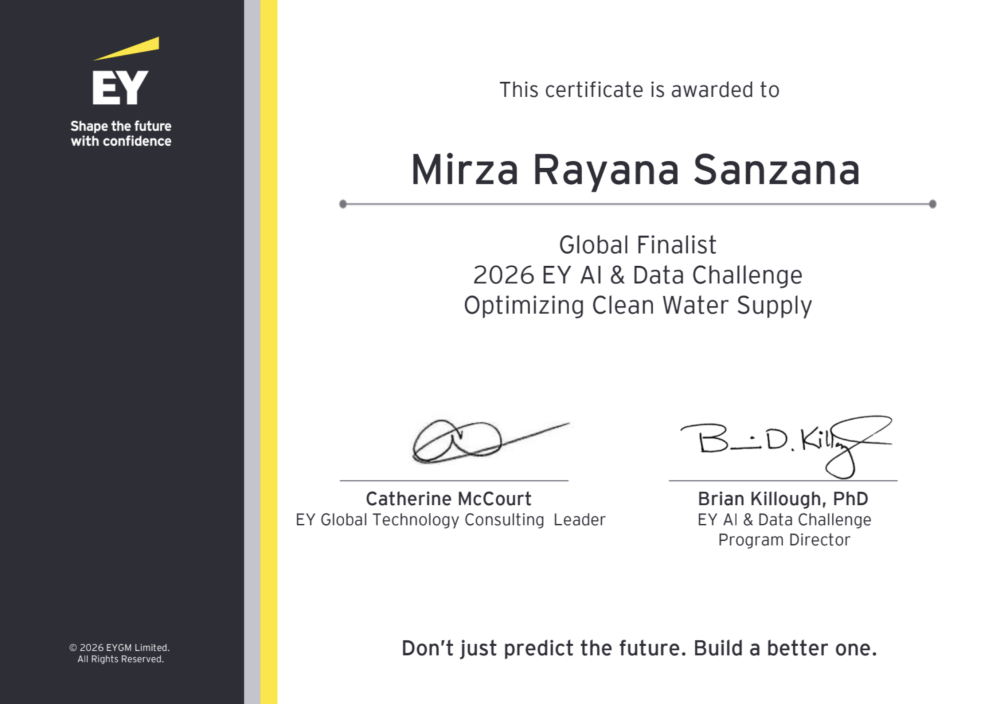
EY Challenge Global Finalist 2026 (Top 5)

2026

HRD Corp Accreditation

2026

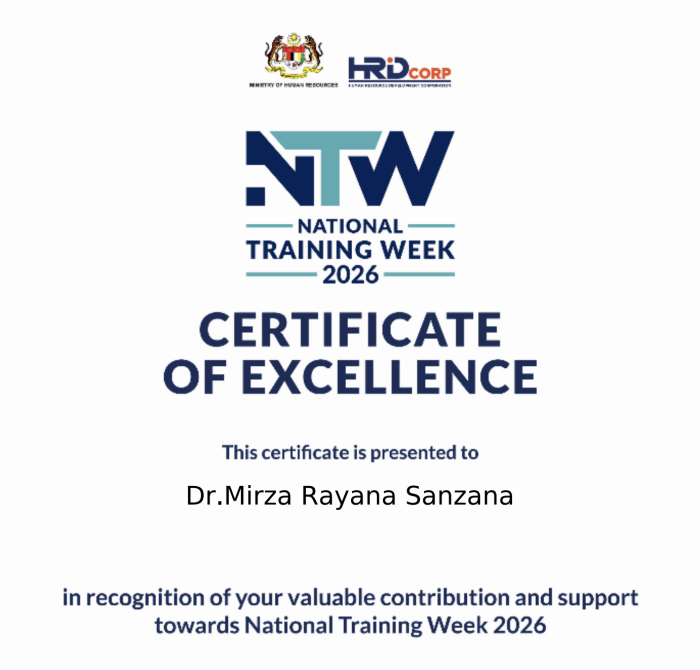
National Training Week 2026

2026

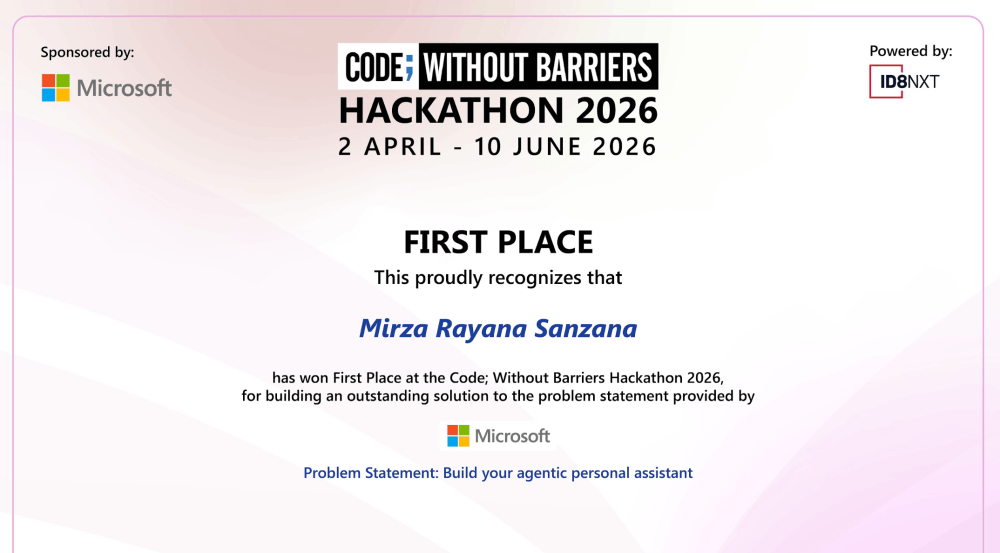
Code Without Barriers Hackathon 2026 Winner

2026

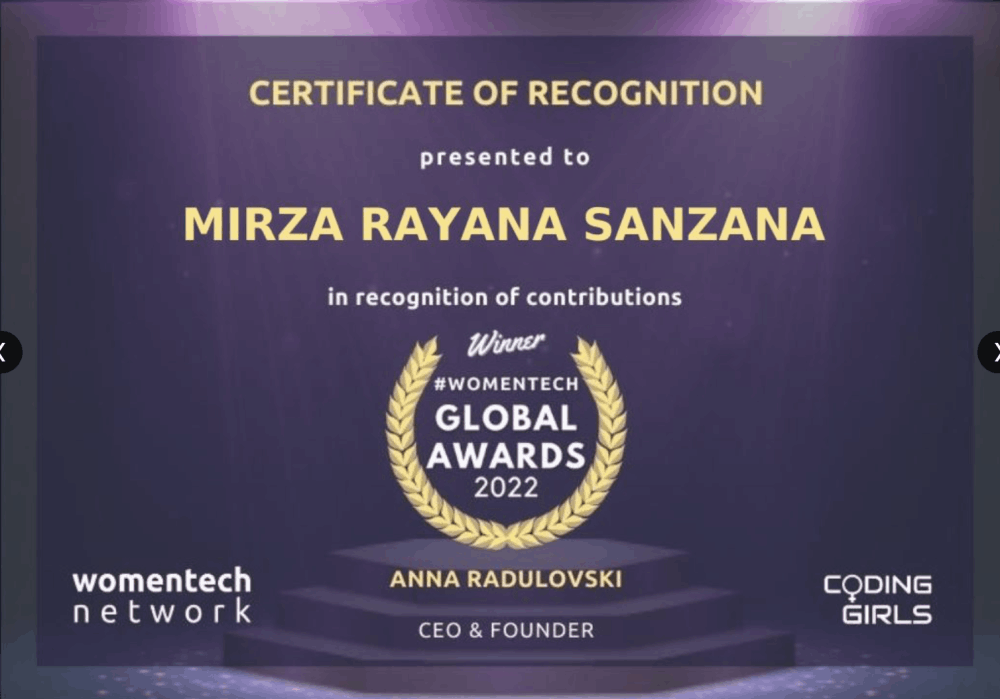
Women Tech Global Awards

2022

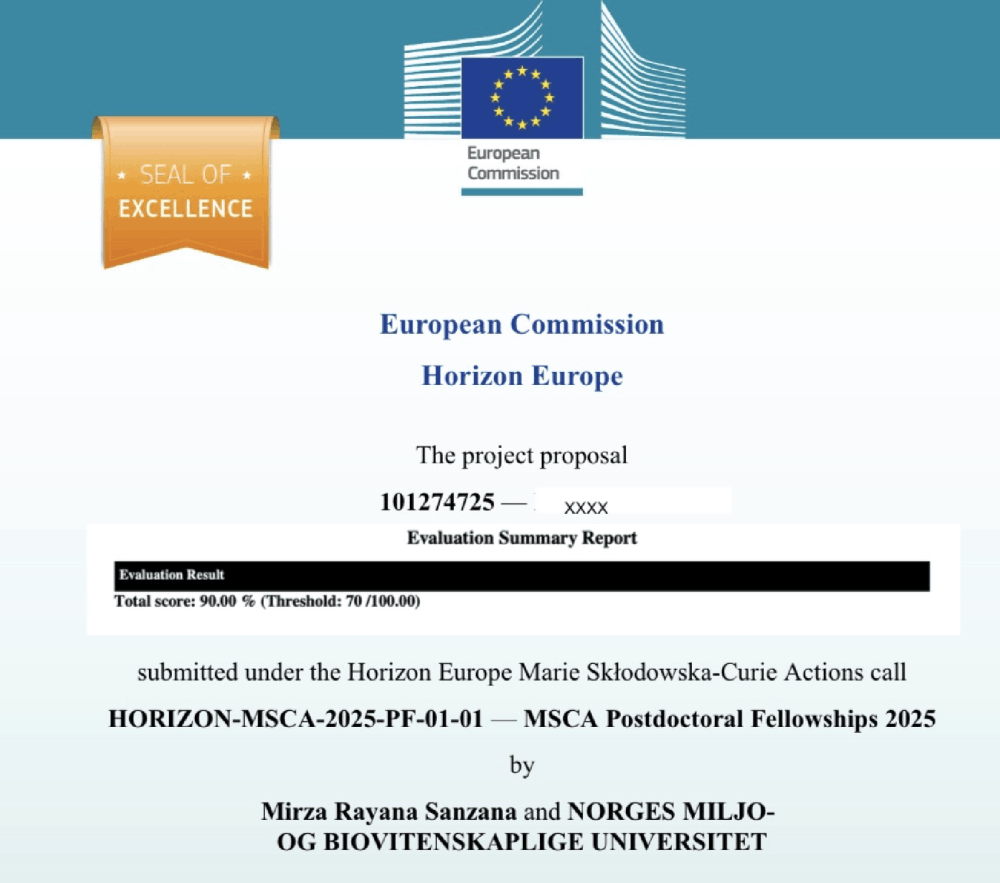
MSCA Seal of Excellence 2025

2025

Engagement

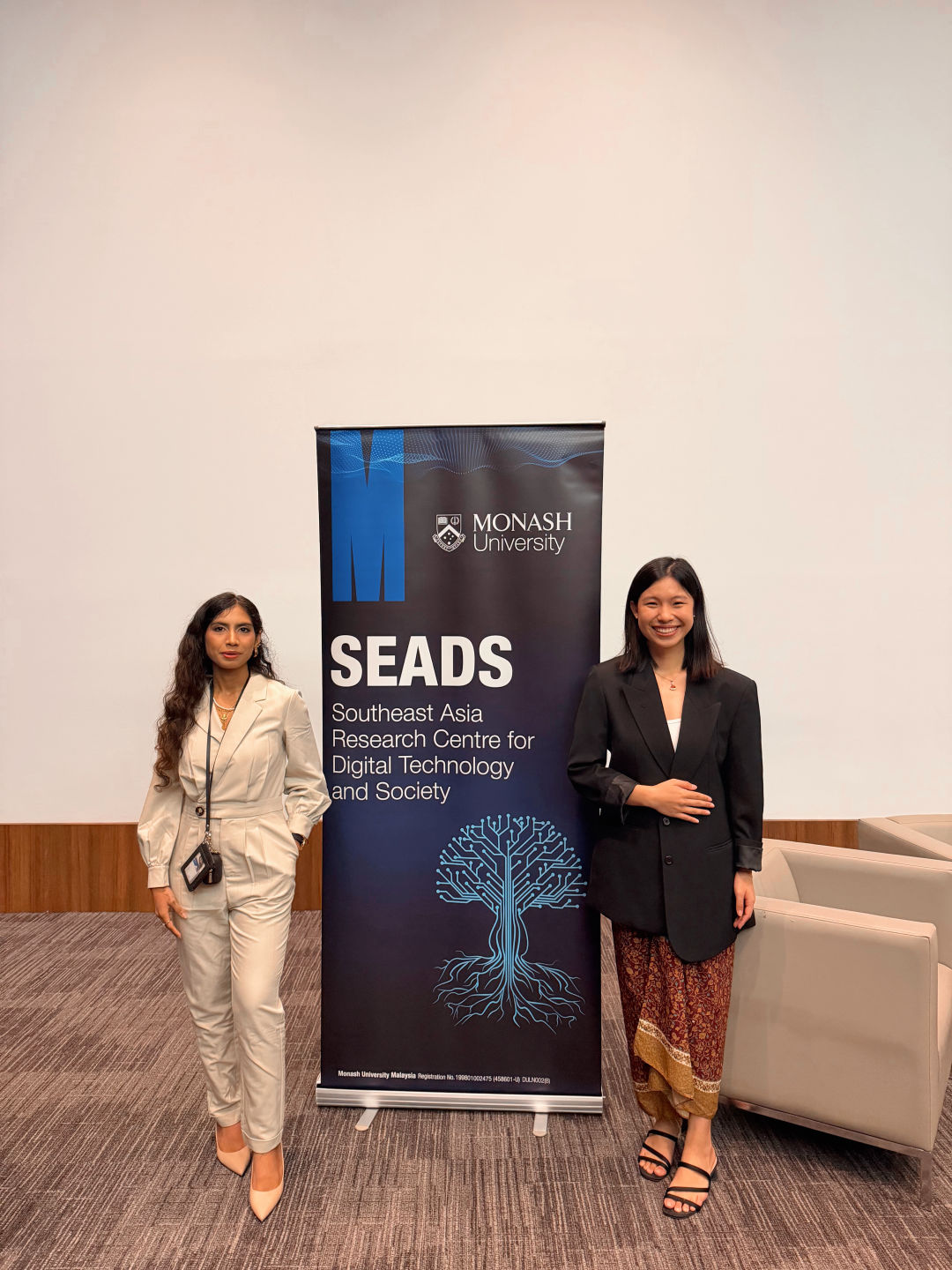
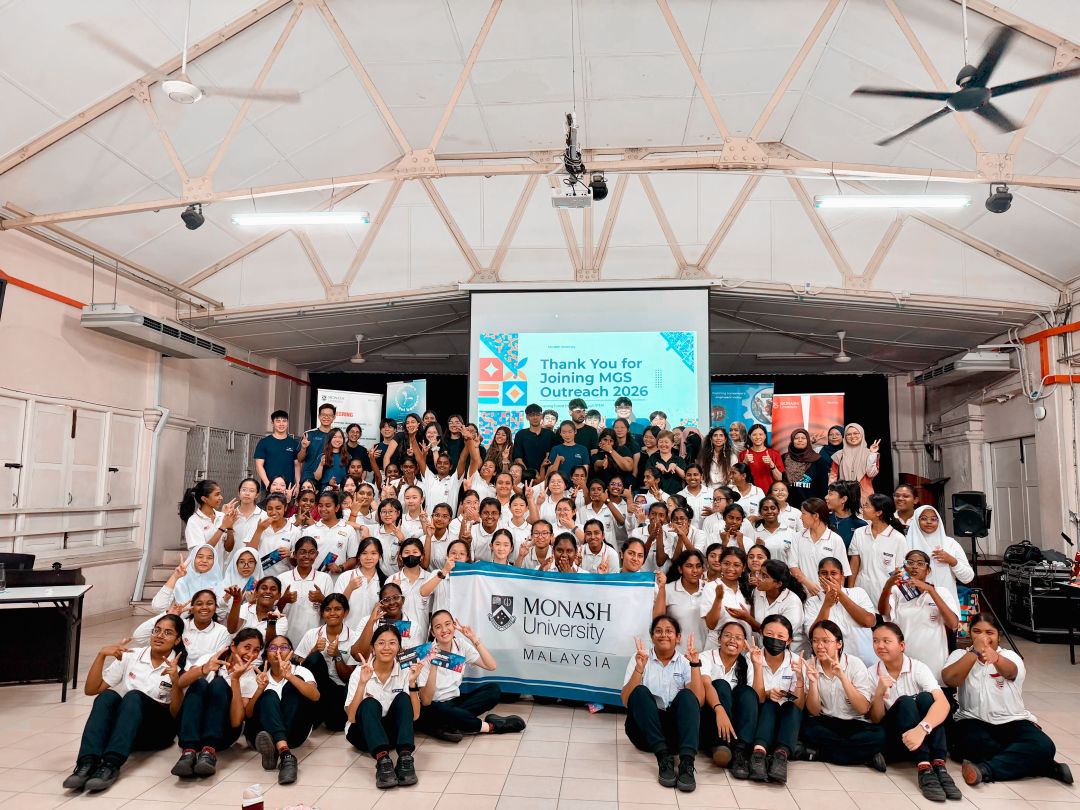
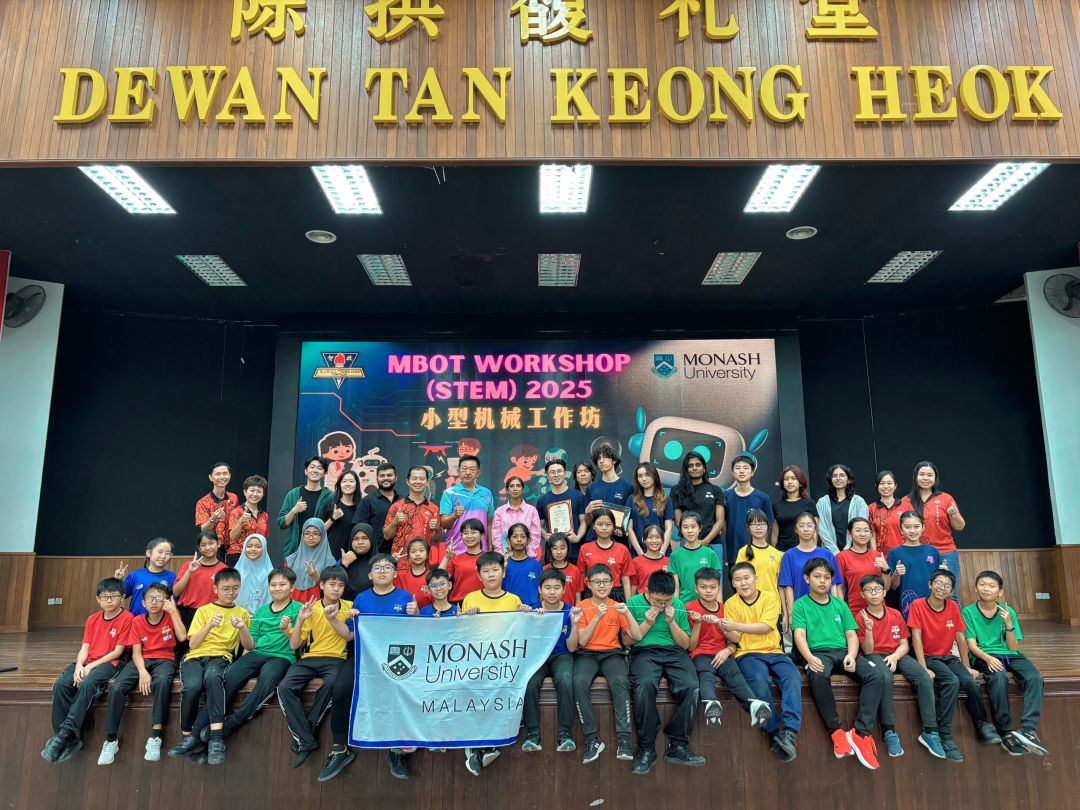
I actively engage with academic, industry and technology communities through mentoring, judging, professional service, outreach and collaborative initiatives. These activities complement my research and teaching by creating opportunities for knowledge exchange, interdisciplinary collaboration and wider participation in technology.

Monash School of IT Seed Grant

2026

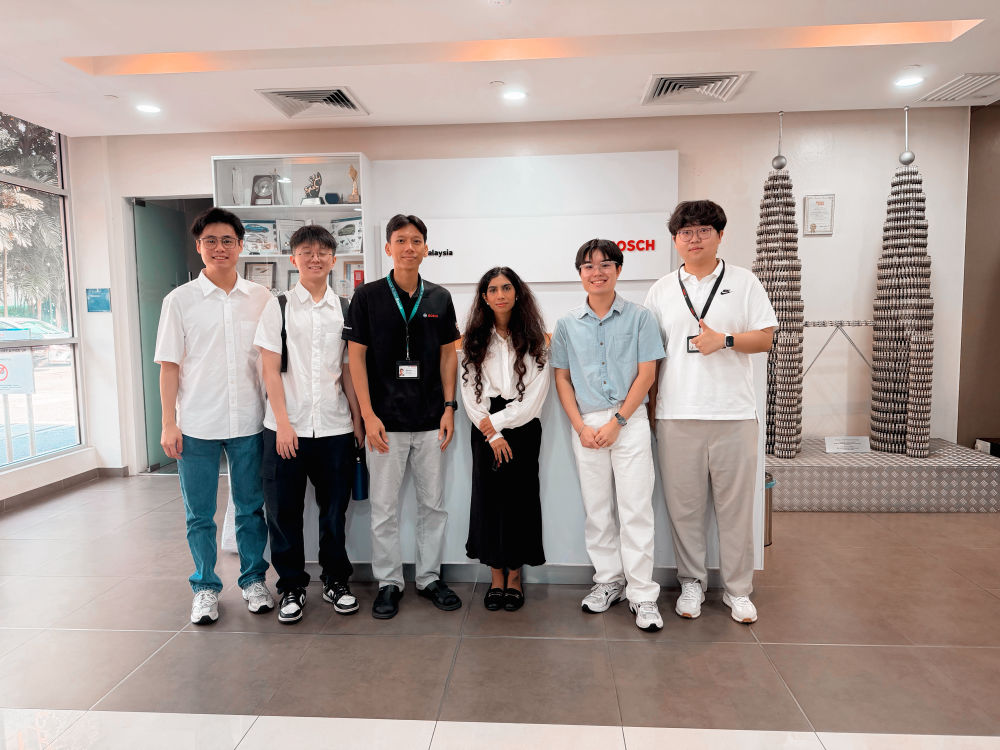
Bosch MoU Signing

2026

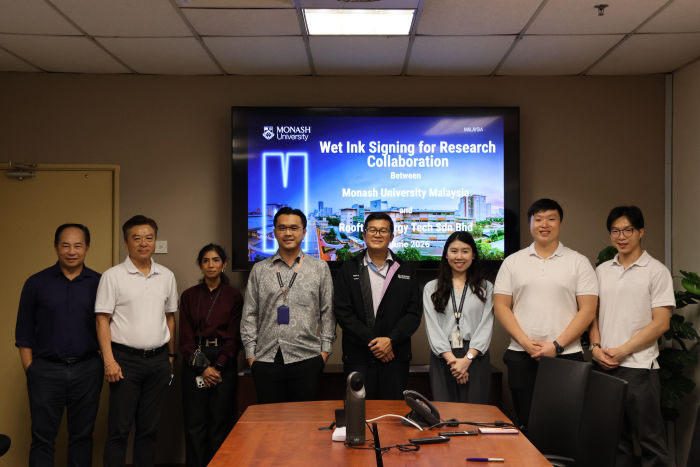
MoA Signing with Rooftop Energy

2026

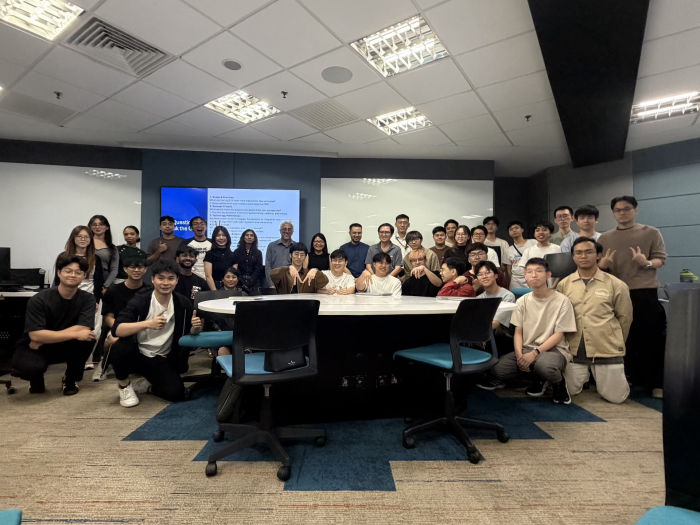
Industry Projects for FIT4002

2026

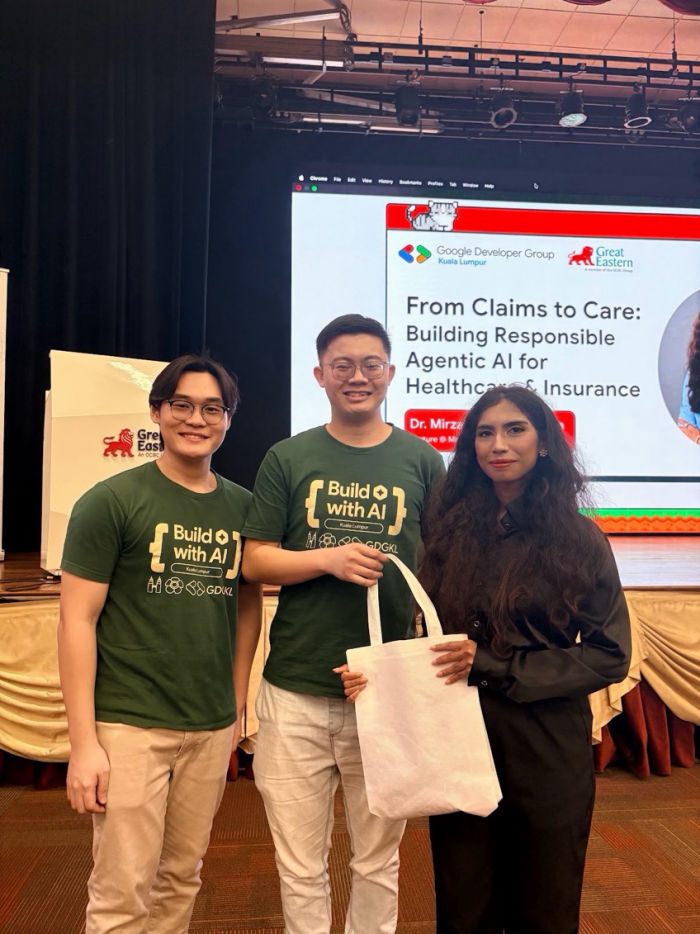
Google Developer Club KL 2026

2026

Google Developer Club Sunway 2026

2026

Speaking

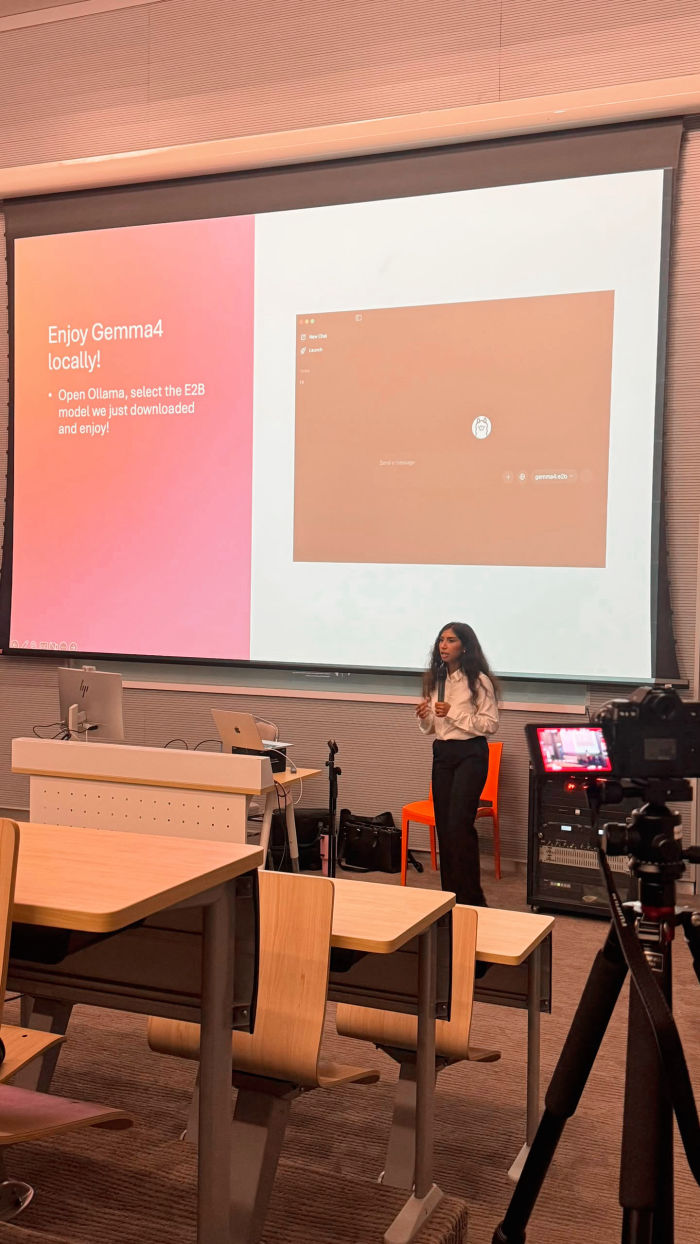
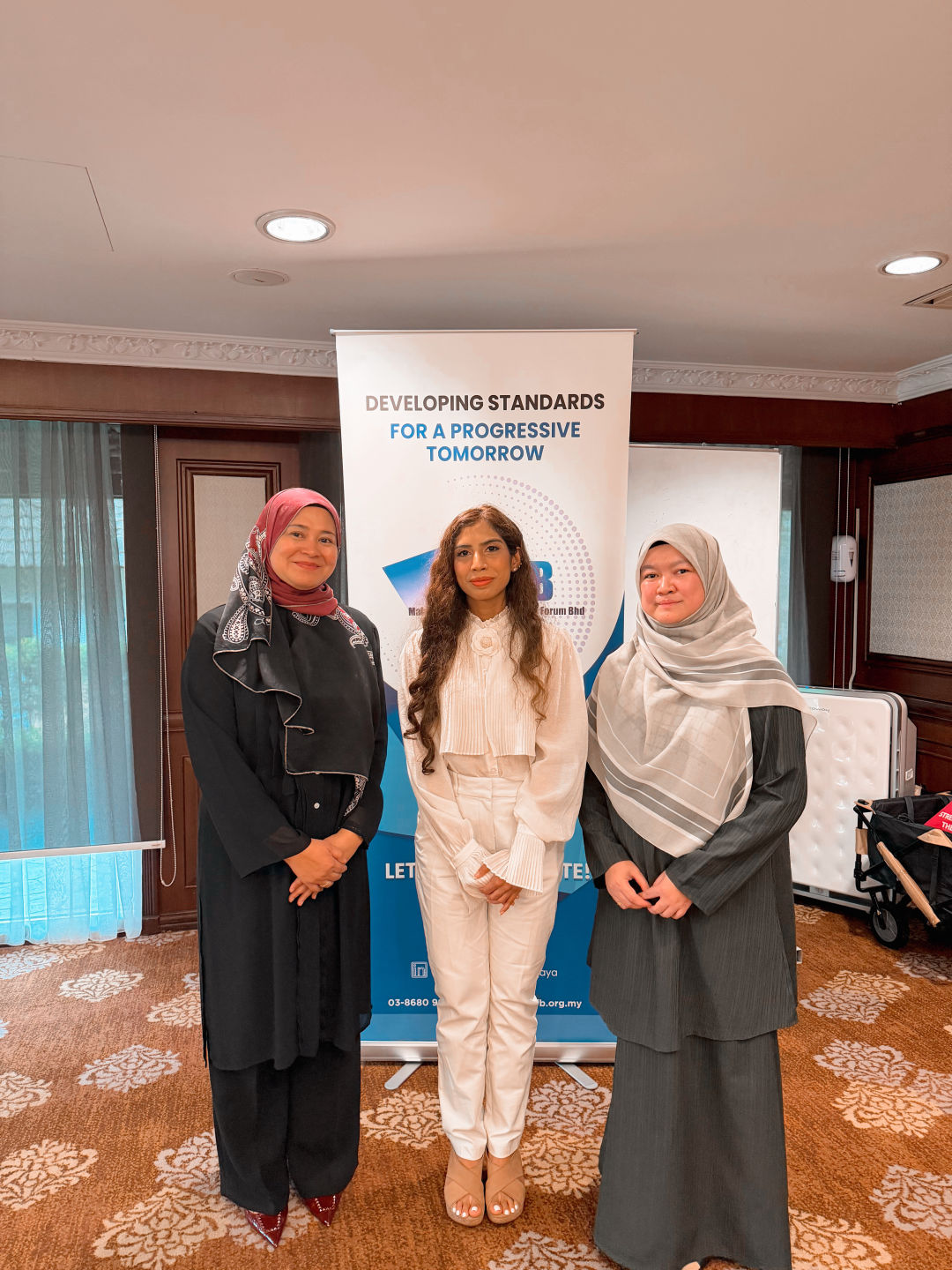
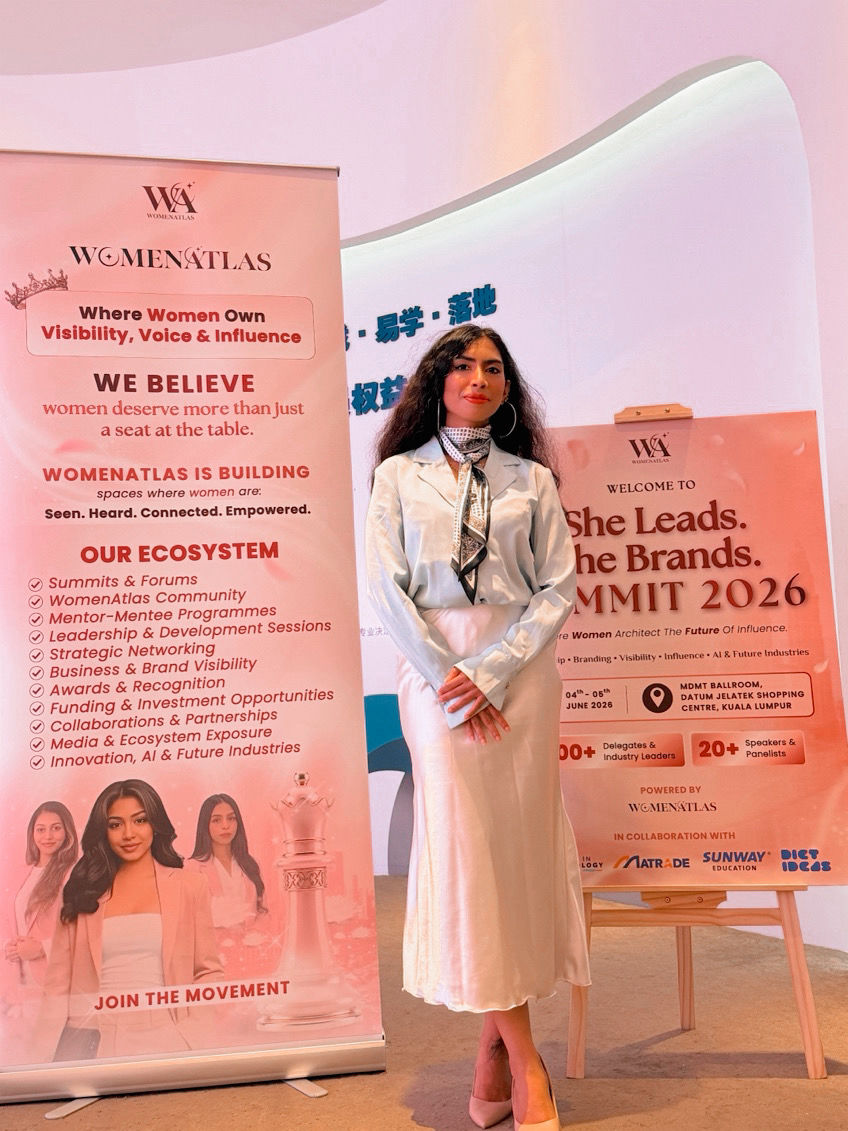
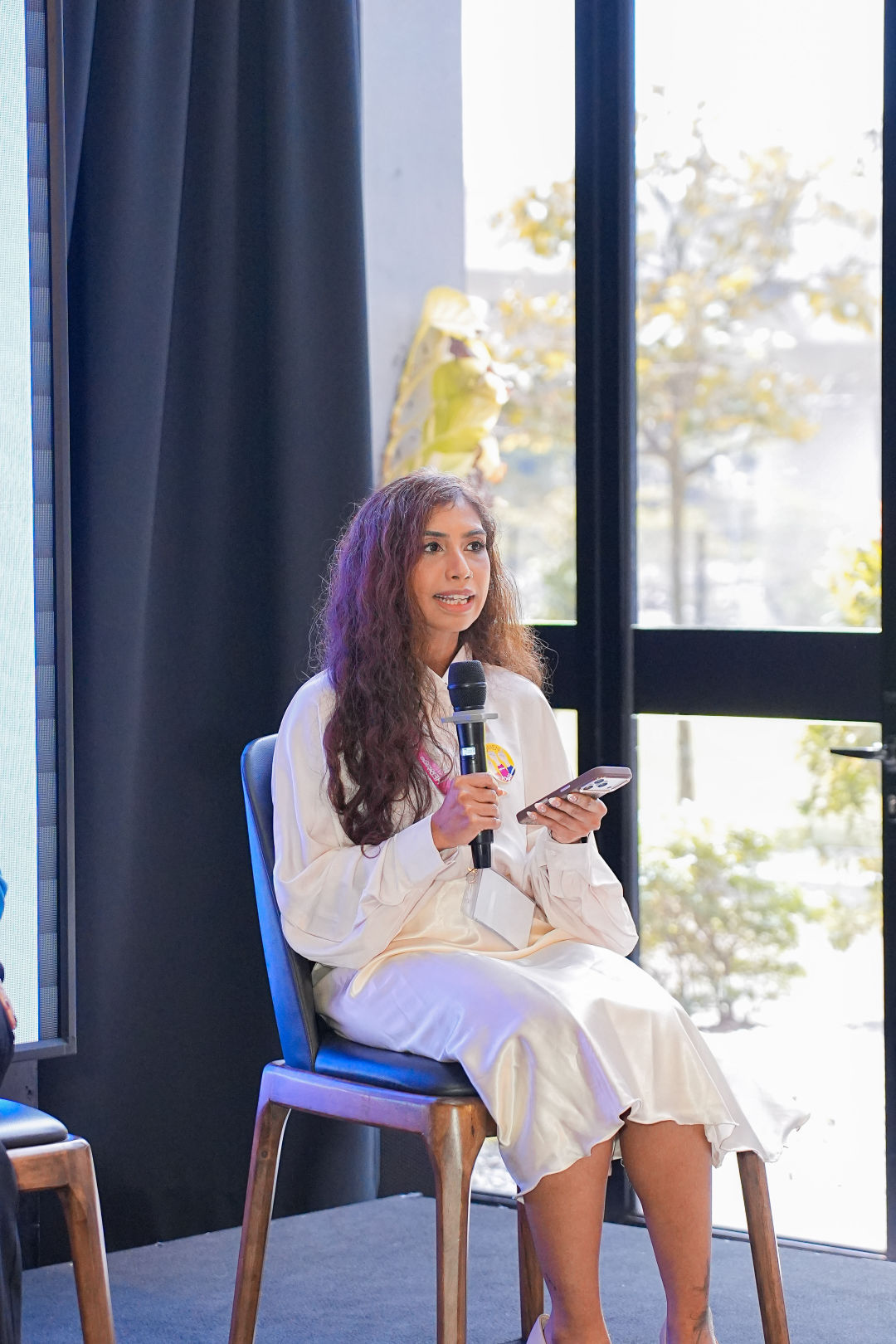
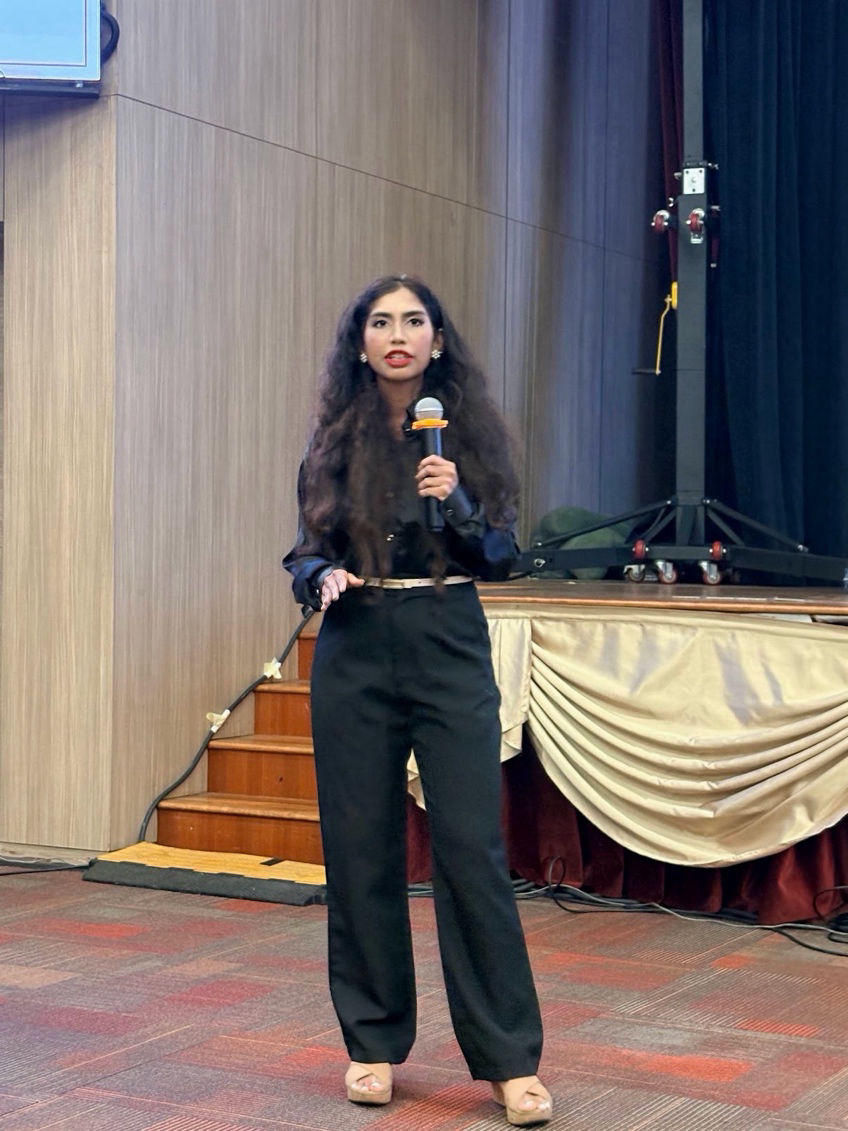
I speak at conferences, industry events, technology communities and academic forums, translating research and emerging technologies into accessible, practical conversations.

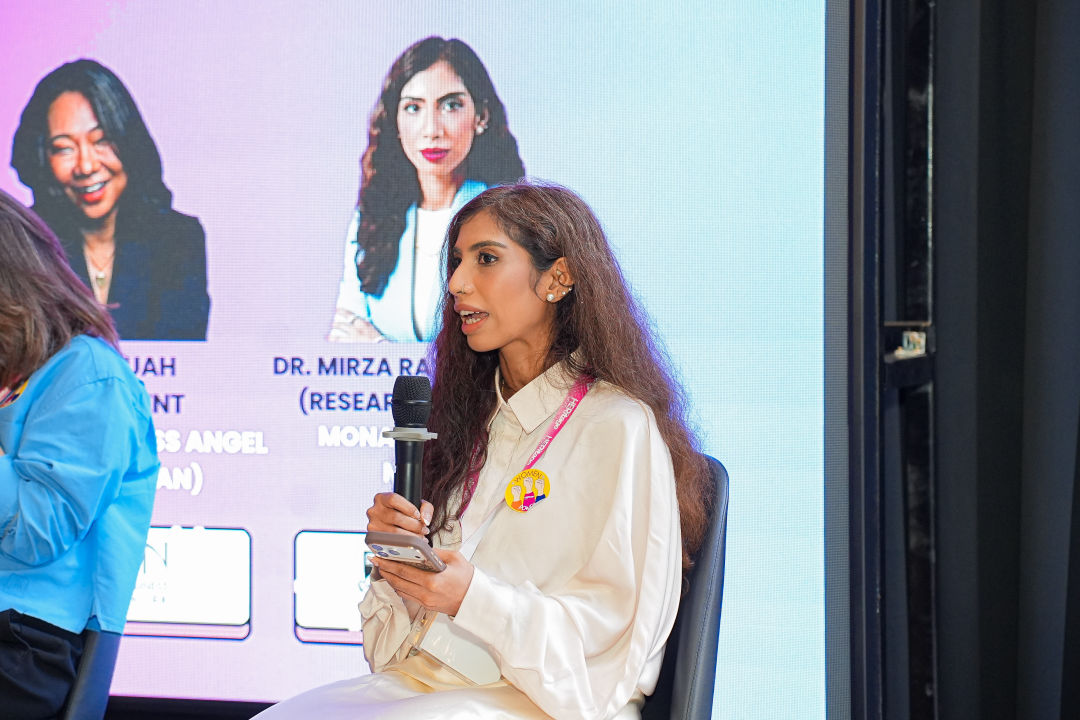
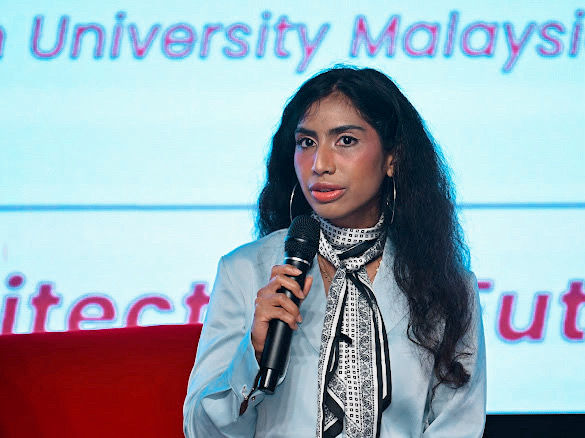
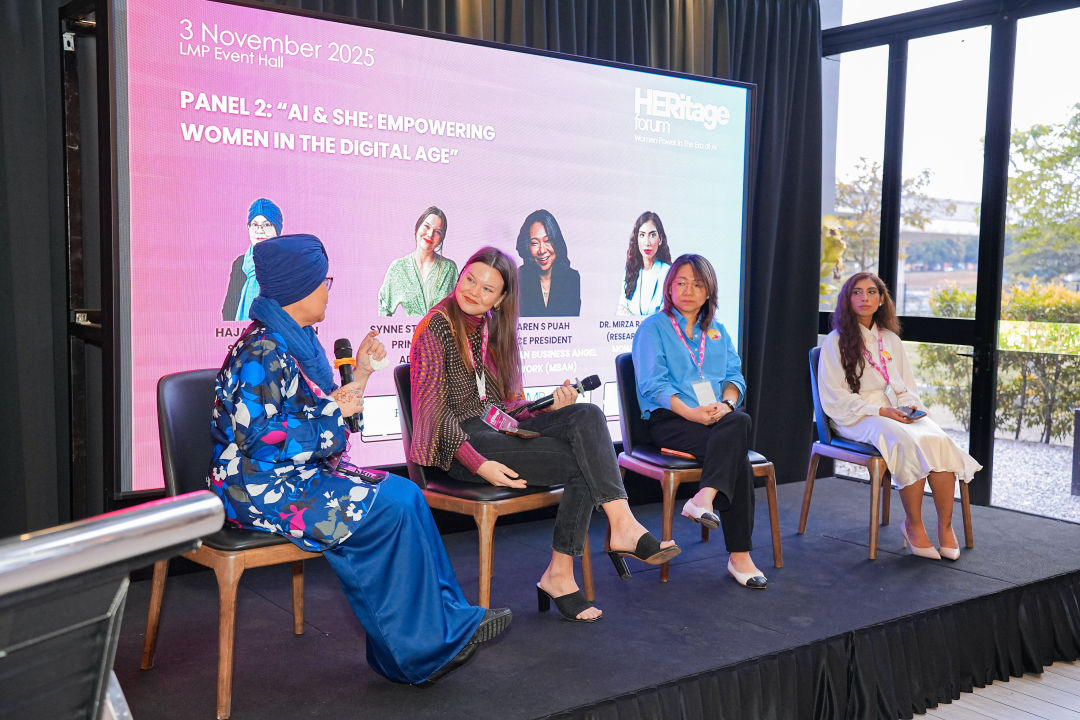
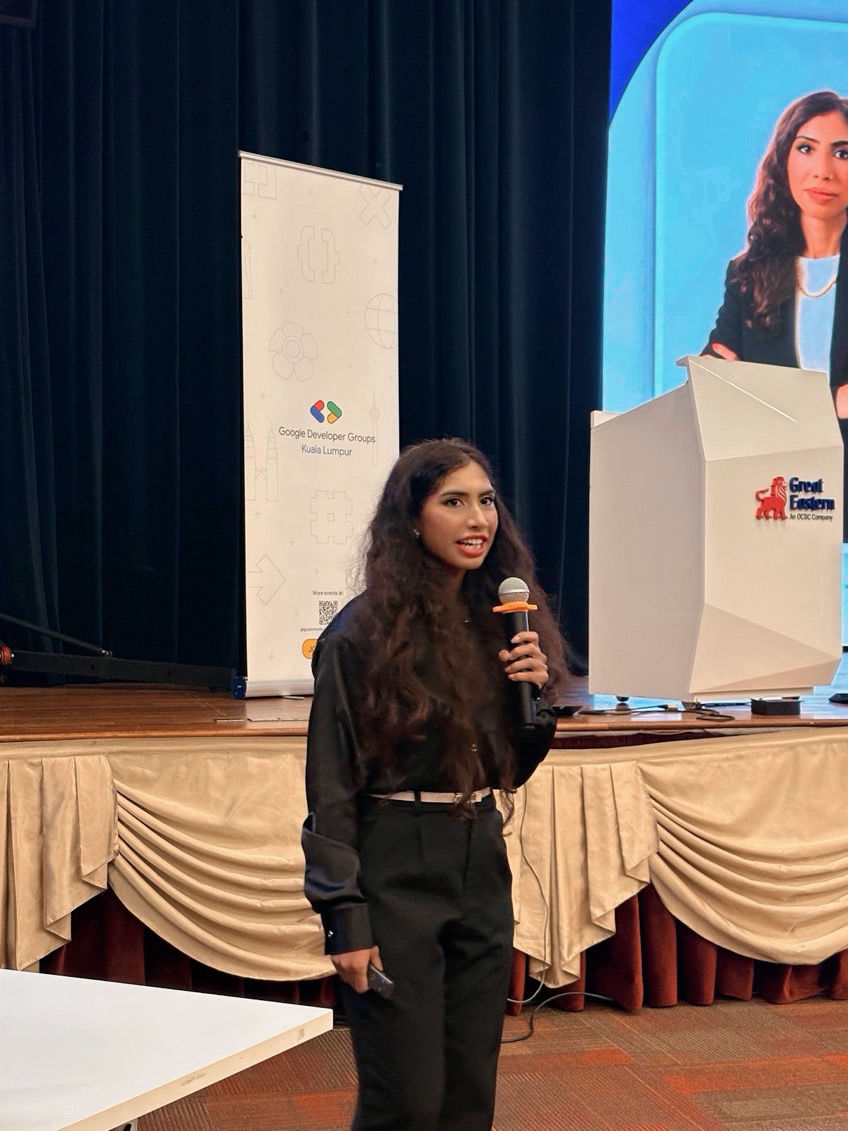
My speaking interests include applied AI, AI for energy and sustainability, emerging technologies, interdisciplinary research and education. I contribute through invited talks, technical sessions, panels and guest lectures, with an emphasis on connecting technical ideas with real-world applications.

Interested in having me speak at your event? I welcome invitations for keynotes, talks, panels, fireside conversations and guest lectures. 

Open Educational Resources

I develop open and accessible learning resources in AI, Python and software engineering, with a focus on making technical concepts easier to understand through practical examples and project-based learning.

These resources complement my teaching and professional training and are designed to support students, early-career learners and anyone interested in building practical technology skills. 

Collaborate with me

I welcome meaningful collaborations across AI, energy systems, sustainable infrastructure and climate resilience, spanning academia, industry and professional engagement.

Research & Industry Collaboration
Open to interdisciplinary research, joint publications, grant proposals and industry collaborations in AI, energy storage, renewable integration and sustainable systems.

Student Supervision
I welcome enquiries from prospective research students whose interests align with AI for energy and sustainable systems.

Speaking
Available for invited talks, panels, and guest lectures, particularly across applied AI, AI for sustainability and interdisciplinary research.

Training
Open to deliver HRD Corp claimable AI upskilling and ESG courses.

Academic Reviewing & Examination
Open to reviewing and examination opportunities for research, theses and projects aligned with my areas of expertise.

Consulting & Technical Input
Available on a selective basis for research and technical advisory work involving AI-driven energy systems and applied AI.

Interested in working together? Please get in touch via email or LinkedIn.

References

"I have seen Rayana grow in incredible ways, where her potential qualities have
materialized again and again. I have been most impressed by her boundless energy,
tenacity, sense of initiative, versatility, adaptability, receptivity, creativity, productivity, and overall capability to bring different fields together in order to solve impactful problems."


Tomas Maul Photo

Tomas Maul


Professor in Computer Science


University of Nottingham Malaysia


"She actively engages in publishing her research work to a broader audience, seeking feedback, and contributing significantly to the advancement of her field of study. She consistently demonstrated remarkable dedication, exceptional intellect, critical thinking skills, creativity, and a strong passion for research."


Jing Ying Wong Photo

Jing Ying Wong


Associate Professor in Civil Engineering
University of Nottingham Malaysia

"She has shown an excellent attitude to disperse a clear knowledge in her field especially in artificial intelligence. She is good in the assigned project
related in design and management that shows a good leadership to pursue excellence."


Chun Chieh Yip Photo

Chun Chieh Yip


Assistant Professor in Civil Engineering
University Tunku Abdul Rahman

"My interaction with her went beyond classroom settings, as recent as in a project in collaboration with Cancer Research Malaysia where she has been helping me with a critical step in building computational analysis for digital
pathology. She has a natural
talent to associate techniques with humanity-side of things."


Iman Liao Photo

 Iman Liao


Associate Professor in Computer Science

University of Nottingham Malaysia

Follow updates on my LinkedIn Newsletter

Passionate about technology? Get insightful, bite-sized reads by following my LinkedIn newsletter. Stay informed and inspired!

iMac on a table

Inquiries

My core research focuses on applying artificial intelligence to optimize energy systems—particularly renewable energy integration, energy storage, and climate-resilient infrastructure. I explore how AI can enhance sustainable cities, building technologies, and smart mobility. My interests also extend to early cancer detection using computer vision, V2X communication security for autonomous vehicles, and AI-driven solutions for urban climate adaptation. I’m passionate about environmental sustainability, investigating how drone technology and Geographic Information Systems (GIS) can support waste management. Additionally, as an educator, I explore tech-driven, interactive learning environments to advance education and improve accessibility in STEM.

My most significant contributions include applying deep learning in facility management to optimize HVAC systems, leading to improved predictive maintenance, energy efficiency, and reduced operational costs. I have developed a machine learning model with a 93.4% accuracy rate for predicting water load in Thermal-Energy-Storage Air-Conditioning systems, enhancing sustainability in building operations. As part of the EY Open Science Data Challenge, I developed a location-agnostic machine learning model to support urban planning and mitigate Urban Heat Island (UHI) effects. By relying solely on environmental and structural features—without using geolocation data—the model achieved a prediction accuracy of 92%. This approach supports scalable, ethical, and transferable planning solutions for climate-resilient cities, particularly in under-mapped or data-scarce regions. Additionally, my research in educational technology has demonstrated that combining virtual reality games with traditional lectures can significantly boost learning outcomes, and I have pioneered the use of gamified virtual labs for low-risk, interactive learning in science education.

You can find my published work in various journals and conference proceedings, including Automation in Construction, Energy Nexus, Journal of Building Engineering (Elsevier), Simulation and Gaming (SAGE), and the Journal of Applied Research in Higher Education (Emerald Insights). I have also presented at IEEE and MDPI conferences. A complete list of my publications is available on my Google Scholar profile, ResearchGate profile, and LinkedIn profile.
a) Yes, I am open to research collaborations that align with my expertise in artificial intelligence, sustainable building technologies, autonomous vehicle security, and early cancer detection. I am also interested in exploring research in national security, particularly in the areas of cybersecurity and stability in the context of cyberweapons. If you have a project in mind, please feel free to contact me through my LinkedIn profile
b) Yes, I am open to supervising final-year or Master’s-level students interested in areas such as AI, renewable energy systems, digital twins, and smart cities. If you're exploring a project aligned with my research interests, feel free to reach out.
c) I enjoy working on interdisciplinary, applied AI research that has societal and environmental impact. This includes themes like energy storage optimization, sustainable urban technologies, and secure autonomous systems.
a) Yes, I’ve collaborated with commercial stakeholders during my PhD and am currently developing proposals for MSCA and ERC grants focused on AI for sustainable energy. My goal is to expand into applied, high-impact collaborations.
b) Absolutely. I actively seek opportunities to collaborate on research that bridges academia with real-world needs—especially in energy systems, green infrastructure, and AI applications. Please reach out if you’re exploring project partnerships or joint proposals.

Mirza Rayana Sanzana Logo

Mirza Rayana Sanzana

© Copyright 2026 Mirza Rayana Sanzana- All Rights Reserved